
 Português
 Deutsch
 Français
 русский
 Italiano
 日本語
 عربي
 Español

Top 5 Wool Scarf Manufacturers For Private Label Collections
Oct 19, 2026
Leave a message
Wool scarves are an important category for autumn and winter fashion collections, offering options in different fiber compositions, textures, weights, patterns, and finishes. For fashion brands, retailers, and wholesalers, working with a private label manufacturer makes it possible to develop scarves that reflect a specific brand identity rather than relying entirely on ready-made designs.
When comparing wool scarf manufacturers, buyers should evaluate material composition, fabric construction, customization options, sample quality, minimum order quantities, and repeat-order consistency. The following five manufacturers are potential suppliers to consider when sourcing custom wool scarves in China.
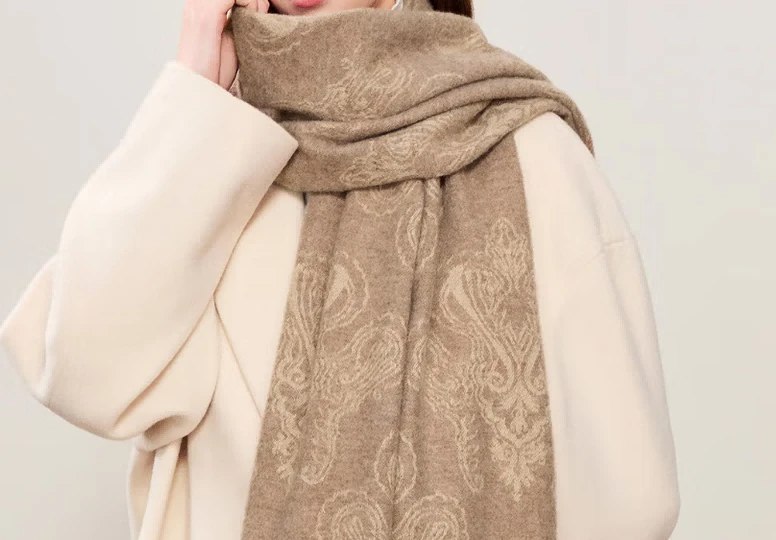
Top 5 Wool Scarf Manufacturers for Private Label Collections
|
Manufacturer |
Location |
Key Focus |
|---|---|---|
|
Hangzhou Yucanhang Textile Co., Ltd. |
Hangzhou, China |
Custom scarves, private label development, OEM/ODM |
|
TALMUD Textile Co., Ltd. |
Zhejiang, China |
Custom scarves and printed textile accessories |
|
Hangzhou HuaCuiYuan Silk Co., Ltd. |
Hangzhou, China |
Custom scarves and textile printing |
|
Hangzhou Zhigeng Silk Co., Ltd. |
Hangzhou, China |
Custom wool scarves and fashion accessories |
|
XingHeMei |
Hangzhou, China |
Custom scarf sourcing and export coordination |
Hangzhou Yucanhang Textile Co., Ltd.
Established in 2012, Hangzhou Yucanhang Textile Co., Ltd. specializes in custom scarves and textile fashion accessories. The company works with businesses developing products for their own brands, retail channels, and wholesale collections. For private label buyers, this provides a starting point for developing wool scarves around specific design concepts, target customers, and seasonal product plans.
Yucanhang's custom scarf development can be discussed in terms of material selection, scarf dimensions, colors, patterns, labels, and packaging. Buyers can communicate their preferred specifications and design references before proceeding with sample development. The final options should be confirmed according to the selected fabric and project requirements.
Private Label Development for Wool Scarves
For brands planning an autumn or winter collection, several details can be considered during product development:
- Material selection: Define the required wool content, blend ratio, fabric texture, and weight according to the intended product positioning.
- Design customization: Develop solid colors, checks, stripes, or brand-specific patterns based on the collection's visual direction.
- Product specifications: Confirm scarf length, width, edge construction, fringes, and other finishing details.
- Brand presentation: Discuss woven labels, logo details, hangtags, and packaging to align the finished product with the brand's identity.
TALMUD Textile Co., Ltd.
TALMUD Textile offers custom scarf and textile accessory services, including printing-related options. Buyers considering the company for private label wool scarves should confirm the availability of the required wool or wool-blend fabrics, suitable printing methods, branding options, and minimum order quantities before placing an order.
Hangzhou HuaCuiYuan Silk Co., Ltd.
Hangzhou HuaCuiYuan Silk Co., Ltd. focuses on scarves and textile products, with printing options for customized designs. Buyers interested in wool scarves should verify the available fabric compositions and confirm whether their preferred patterns, dimensions, and finishing requirements can be accommodated.
Hangzhou Zhigeng Silk Co., Ltd.
Hangzhou Zhigeng Silk Co., Ltd. offers custom scarf products, including wool scarf options. It may be worth evaluating for private label projects that require customized dimensions, patterns, and branding details, subject to confirmation of the specifications available for each order.
XingHeMei
XingHeMei operates in scarf sourcing and export coordination, working with partner factories on customized products. Buyers considering it for private label wool scarves should confirm the manufacturing arrangements, material specifications, sample approval process, and quality inspection responsibilities.
What Materials Should Buyers Consider for Private Label Wool Scarves?
Material selection affects warmth, softness, drape, surface appearance, care requirements, and product cost. Buyers should confirm the exact fiber composition rather than relying on general descriptions such as "wool feel."
|
Material |
Main Characteristics |
Purchasing Considerations |
|---|---|---|
|
100% wool |
Natural warmth and a characteristic wool texture |
Confirm fiber composition, softness, and care instructions |
|
Merino wool |
Fine fibers that can provide a softer hand feel |
Check fiber grade, fabric weight, and target price |
|
Wool-cashmere blend |
Combines wool with cashmere fibers |
Confirm the percentage of each fiber and material cost |
|
Wool-silk blend |
Combines wool's warmth with silk's smooth appearance |
Evaluate drape, surface texture, and intended use |
|
Wool-acrylic blend |
Combines wool with a synthetic fiber |
Check the blend ratio, hand feel, and labeling requirements |
The appropriate material depends on the target customer, retail price, and intended product design. Buyers should request fabric swatches or finished samples before approving bulk production.
How Can Brands Develop a Distinctive Private Label Wool Scarf Collection?
A successful collection needs visual consistency while offering enough variety to appeal to different customers. Rather than producing multiple scarves with nearly identical specifications, brands can plan the range around complementary designs and product characteristics.
Establish a seasonal direction: Choose a core color palette that matches the brand's autumn or winter collection.
Mix pattern styles: Combine solid colors with checks, stripes, or custom patterns to create variety.
Plan different product formats: Consider long scarves, square scarves, and shawls according to the target market.
Define branding details: Specify label placement, logo treatment, hangtags, and retail packaging.
Separate product specifications: Maintain individual records for each design's material, dimensions, colors, and finishing.
This approach makes it easier for purchasing teams to request samples, compare quotations, and manage multiple styles within one collection.
What Is the Difference Between Woven and Printed Wool Scarves?
Woven and printed scarves create different visual effects and may require different production methods.
Woven wool scarves form patterns through the arrangement of yarns during weaving. Plaid, stripes, and jacquard designs can create texture within the fabric itself. Buyers should review pattern repeats, yarn colors, fabric weight, and the appearance of both sides.
Printed wool scarves apply a design to an existing fabric surface. This method may suit artwork featuring illustrations, detailed graphics, or specific color arrangements. Buyers should confirm that the chosen fabric is suitable for the proposed printing process and inspect a sample for color definition and surface consistency.
The best option depends on the artwork, fabric construction, budget, and order volume. Manufacturers should confirm technical feasibility before the design is finalized.
How Should Buyers Evaluate Wool Scarf Samples?
A sample provides an opportunity to check whether the proposed material and workmanship meet the product brief. Buyers should establish clear evaluation criteria before approving production.
Fiber composition: Confirm the declared material content and any required blend ratio.
Fabric feel: Evaluate softness, thickness, texture, and drape.
Dimensions: Measure the finished length and width against the agreed specifications.
Pattern and color: Check color consistency, pattern alignment, and the appearance of both sides.
Finishing: Inspect hems, fringes, embroidery, loose yarns, and other visible details.
Branding and packaging: Verify label placement, logo execution, and the presentation of the packaged product.
Once the sample is approved, retain it as the reference for bulk production. Any later changes to the material, pattern, or finishing should be reviewed before manufacturing proceeds.
Which Factors Affect the Cost of Private Label Wool Scarves?
The unit price depends on the combined material and production requirements. Comparing quotations without aligning specifications can lead to misleading conclusions.
|
Cost Factor |
Potential Effect on Price |
|---|---|
|
Fiber composition |
Wool grade, cashmere content, and blend ratios influence material costs |
|
Fabric construction |
Weaving method, yarn specifications, and fabric weight affect production requirements |
|
Design complexity |
Jacquard patterns, custom printing, embroidery, and special finishes may add costs |
|
Order quantity |
Material purchasing and production allocation may vary with volume |
|
Branding |
Custom labels, hangtags, gift boxes, and individual packaging add materials and labor |
|
Sampling |
Development samples and repeated revisions may involve separate charges |
Buyers should request a quotation based on the same specifications when comparing suppliers. MOQ, sample fees, payment terms, lead time, packaging costs, and shipping arrangements should also be clarified before an order is confirmed.
What Should Buyers Include in a Wool Scarf RFQ?
A detailed request for quotation helps manufacturers understand the project and makes supplier comparisons more meaningful.
Buyers should include:
Product details: Scarf style, dimensions, fabric weight, and intended use.
Material requirements: Wool type, fiber composition, and required blend ratio.
Design information: Artwork, pattern references, color palette, and logo files.
Finishing requirements: Hemming, fringes, embroidery, labels, and hangtags.
Order details: Quantity per design, expected repeat orders, and packaging requirements.
Commercial requirements: Target delivery date, destination market, and requested shipping terms.
If the specifications are not finalized, buyers can provide reference images and a preliminary brief, then ask the manufacturer which details must be confirmed before sampling.